
This fall, a major shift happened in menopause care: the U.S. Food and Drug Administration (FDA) announced it is removing the long-standing black box warnings from hormone replacement therapy (HRT) products used to manage menopause symptoms. For millions of women navigating this transition, this change marks a moment of clarity after decades of confusion and fear. (See story here)
What Changed?
For more than 20 years, many estrogen and estrogen–progestogen menopause treatments carried the FDA’s strongest safety label, the black box warning, alerting users to serious risks like heart disease, breast cancer, and dementia. These warnings stemmed largely from early findings in the Women’s Health Initiative (WHI) published in the early 2000s, which were later understood to have limitations, especially in how they were interpreted and generalized to all menopausal women. (Harvard Women’s Health Watch)
Why This Matters
This update may feel subtle — a label change rather than a new drug — but it’s meaningful for several reasons:
- Fear has influenced care choices. Many women avoided HRT because “black box” sounded synonymous with high danger, even when individualized risk might have been low. PBS
- Timing matters. Current evidence suggests the health effects of hormone therapy differ depending on when it’s started. Initiating HRT within about 10 years of menopause onset or before age 60 appears to offer more benefits and fewer risks for many people. U.S. Food and Drug Administration
- Benefit–risk balance is personal. Hormone therapy still isn’t right for everyone, and the FDA isn’t removing all warnings. For example, systemic estrogen-alone products still have a warning related to endometrial cancer in women with a uterus U.S. Food and Drug Administration
What This Doesn’t Mean
Some media have framed this as “HRT is now safe for everyone.” That’s not the case — HRT still carries potential risks. What’s new is that the label language will be updated to better inform conversations between women and their healthcare providers, focusing on the most current evidence rather than outdated fears. Harvard Health
Putting It in Perspective
Decades of menopause care have been shaped by early studies that didn’t always reflect the real-world diversity of women experiencing menopause. As science evolves, so too should how treatments are described and offered. These label changes are a step toward more nuanced, personalized care — where symptoms, age, timing, health history, and individual priorities are front and center in decision-making. STAT
Takeaway for Women in Midlife
If you’ve ever wondered whether HRT could be right for you — whether for hot flashes, sleep disturbance, mood shifts, bone health, or other symptoms — this policy shift is encouraging because it can open clearer, less stigmatized conversations with clinicians. It’s not a blanket endorsement or dismissal. It’s a more accurate starting point for shared choices. U.S. Food and Drug
Take Control of Your Own Care
Talk to your clinician about your symptoms, your health history, and your goals. Updated labeling means more room for context and less fear, but informed decisions always begin with a conversation. Real care happens in the nuance — not a warning box.
Nutrition’s Role During Menopause
Nutrition plays a quiet but powerful role during menopause, especially for women considering or using hormone therapy. Anti-inflammatory foods, healthy fats, and adequate protein support cardiovascular health, muscle preservation, and overall metabolic stability. All of these factors matter during midlife and beyond.
MoonGlow Recipe: Anti-Inflammatory Citrus Salmon with Olive Oil & Herbs
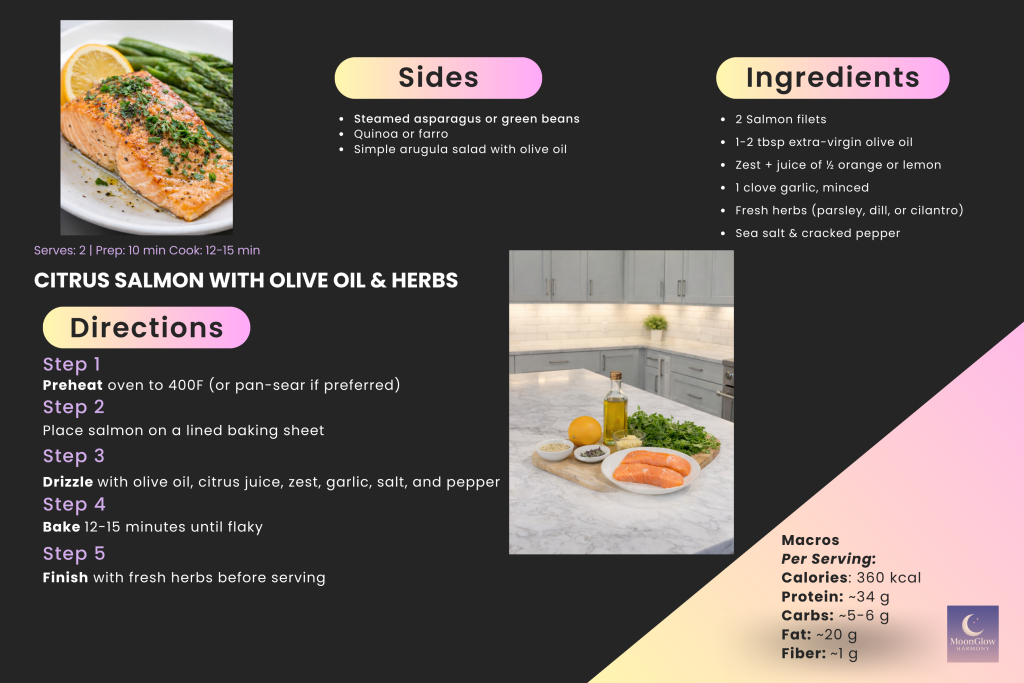
🍋 Citrus Salmon with Olive Oil & Herbs
Serves: 2
Prep time: 10 minutes
Cook time: 12–15 minutes
Ingredients
- 2 salmon fillets
- 1–2 tbsp extra-virgin olive oil
- Zest + juice of ½ orange or lemon
- 1 clove garlic, minced
- Fresh herbs (parsley, dill, or cilantro)
- Sea salt & cracked pepper
Optional sides
- Steamed asparagus or green beans
- Quinoa or farro
- Simple arugula salad with olive oil
Instructions
- Preheat oven to 400°F (or pan-sear if preferred).
- Place salmon on a lined baking sheet.
- Drizzle with olive oil, citrus juice, zest, garlic, salt, and pepper.
- Bake 12–15 minutes until flaky.
- Finish with fresh herbs before serving.
Leave a Reply